Hire Culture Security Awareness Training Policy
Security Awareness Policy
Purpose
Hire Culture is committed to protecting client information, company information, and the systems used to support our Remote Team Members (RTMs), employees, contractors, and clients.
The purpose of this policy is to establish minimum security awareness training requirements and security expectations for all personnel working through or on behalf of Hire Culture.
Scope
This policy applies to:
• All Hire Culture employees
• All Remote Team Members (RTMs)
• Independent contractors engaged by Hire Culture
• Temporary workers or consultants with access to company or client information
Policy Statement
All personnel are responsible for maintaining the confidentiality, integrity, and security of company and client information.
Security awareness training is required to ensure individuals understand common security risks and their responsibilities in protecting sensitive information.
Training Requirements
New Hire / Onboarding Training
All personnel must complete security awareness training during onboarding before receiving access to company systems, client systems, or sensitive information.
Training Topics Include:
• Confidentiality obligations
• Password security requirements
• Phishing and social engineering awareness
• Safe email practices
• Secure file-sharing practices
• Device security expectations
• Reporting suspicious activity
• Protection of client information
Completion of onboarding security training will be documented as part of the onboarding process.
Ongoing Refresher Training
All personnel must participate in security awareness refresher training at least annually.
Additional Training May Be Required If:
• Significant security threats emerge
• Company policies change
• A security incident occurs
• A client requires additional security training
Refresher training may be delivered through:
• Live training sessions
• Recorded training modules
• Written security updates
• Company growth and development meetings
Phishing and Social Engineering Awareness
Personnel must remain vigilant against phishing attempts and social engineering attacks.
Examples Include:
• Suspicious emails requesting passwords
• Unexpected links or attachments
• Requests for financial information
• Messages impersonating company leadership, clients, vendors, or coworkers
Personnel Are Expected To:
• Verify suspicious requests before responding
• Avoid clicking unknown links
• Avoid opening unexpected attachments
• Report suspicious communications immediately
No employee or RTM should ever share passwords through email, chat, text message, or other unsecured channels.
Password and Account Security Requirements
Personnel must follow the password security standards outlined below.
Password Requirements
• Use unique passwords for business accounts
• Create passwords that are difficult to guess
• Avoid using personal information in passwords
• Change passwords immediately if compromise is suspected
Multi-Factor Authentication (MFA)
Where available, MFA should be enabled for:
• Email accounts
• Company systems
• Client systems
• Cloud storage platforms
Account Sharing
The sharing of usernames, passwords, authentication codes, or account credentials is strictly prohibited unless explicitly approved and documented.
Device and Workspace Security
Personnel are expected to:
• Lock devices when unattended
• Use antivirus and security software where applicable
• Maintain updated operating systems and software
• Avoid using unsecured public Wi-Fi when accessing sensitive information
• Store company and client information only in approved systems
Confidentiality Expectations
All personnel are required to protect confidential information belonging to:
• Hire Culture
• Hire Culture clients
• Prospective clients
• Fellow RTMs and employees
Confidential Information May Include:
• Client business information
• Customer data
• Financial information
• Proprietary processes
• Login credentials
• Internal company communications
Personnel may only access information necessary to perform their assigned responsibilities.
Confidential information may not be disclosed, copied, shared, or distributed without authorization.
These obligations remain in effect after termination of employment or engagement with Hire Culture.
Reporting Security Concerns
Personnel must immediately report:
• Suspected phishing attempts
• Lost or stolen devices
• Unauthorized account access
• Suspected data breaches
• Security incidents involving client information
• Any activity that may compromise company or client data
Reports Should Be Submitted To:
Hire Culture Leadership Team
Leadership will investigate reported concerns and take appropriate action.
Policy Violations
Failure to comply with this policy may result in:
• Additional training requirements
• Removal of system access
• Disciplinary action
• Termination of employment or engagement
• Client notification where required
Acknowledgment
All personnel must acknowledge that they have reviewed and understand this Security Awareness Training Policy as part of onboarding and ongoing employment or engagement with Hire Culture.
SOLUTIONS
Remote Team Members
FULL-TIME RTM
40 hours per week
Interview and Select Your RTM
Monthly Check-Ins
Bi-Monthly RTM Group Training
Leadership Development
Training Library
Access to 1:1 coaching for RTM
PART-TIME RTM
20 hours per week
Interview and Select Your RTM
Monthly Check-Ins
Monthly RTM Group Training

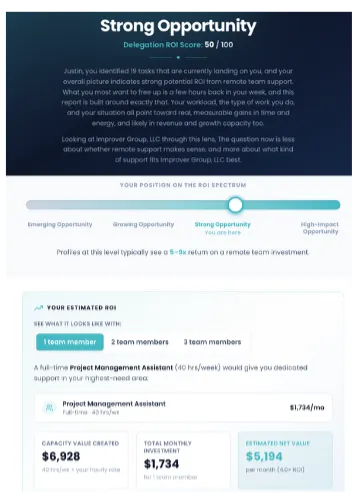
What's your time really costing you?
Take our free 3-minute assessment and get a personalized report with a projected ROI for your next hires.
Ready to Scale with the Right Support?
Hire Culture brings it all together through Remote Team Support, consulting, and training designed to create alignment, build healthy teams, and unlock sustainable growth.
This isn’t just about getting things done. It’s about building something meaningful with a partner who walks with you every step of the way.


The Journey
Building the right team is not a one-time decision—it's a process. Every step
is intentional and aligned with your business goals.








Connect
This is where we begin building meaningful relationships. We initiate contact, spark interest, and help prospects connect with the idea of hiring a RTM. It’s about building trust and opening the door to partnership.

Discover
We guide the client through a structured discovery process to uncover real needs, identify opportunities, and design the right support system. From strategy to matching, we ensure every piece is aligned before launch.
Prep
We take everything defined during Consult and begin building the actual working relationship: finalizing the role, sourcing the right RTM, and preparing both sides for a smooth and successful start.

Launch
The RTM officially starts working within the client. Over the first 30 days, we focus on activation: aligning communication, defining deliverables, and creating early momentum. It's a high-touch phase designed to set the trajectory for success.

Scale
We provide continuous support to increase impact and performance. Through training, feedback loops, coaching, and client check-ins, we fuel ongoing success and deepen the client relationship.

Expand
After a year, systems are running smoothly and roles are clear. In this phase, we shift to steady-state support, maintaining momentum, surfacing growth opportunities, and protecting the rhythms you’ve built. Scale represents operational ease.

Hire Culture helps businesses build culture aligned teams through strategy, structure, and support so they can scale without becoming the bottleneck




Know a business that needs support?
Looking to join our team?
© 2026 Hire Culture. All Rights Reserved.
Hire Culture helps businesses build culture aligned teams through strategy, structure, and support so they can scale without becoming the bottleneck
Know a business that needs support?
Looking to join our team?
© 2026 Hire Culture. All Rights Reserved.